


In 1986, a simple idea marked the beginning of a new chapter at Orkel. Forty years later, the principles behind that first Orkel round baler have developed into technology used across agriculture, industry and waste management, around the world.
On 1 October, current and former Orkel employees gathered at Fannrem to celebrate 40 years of round bale technology.
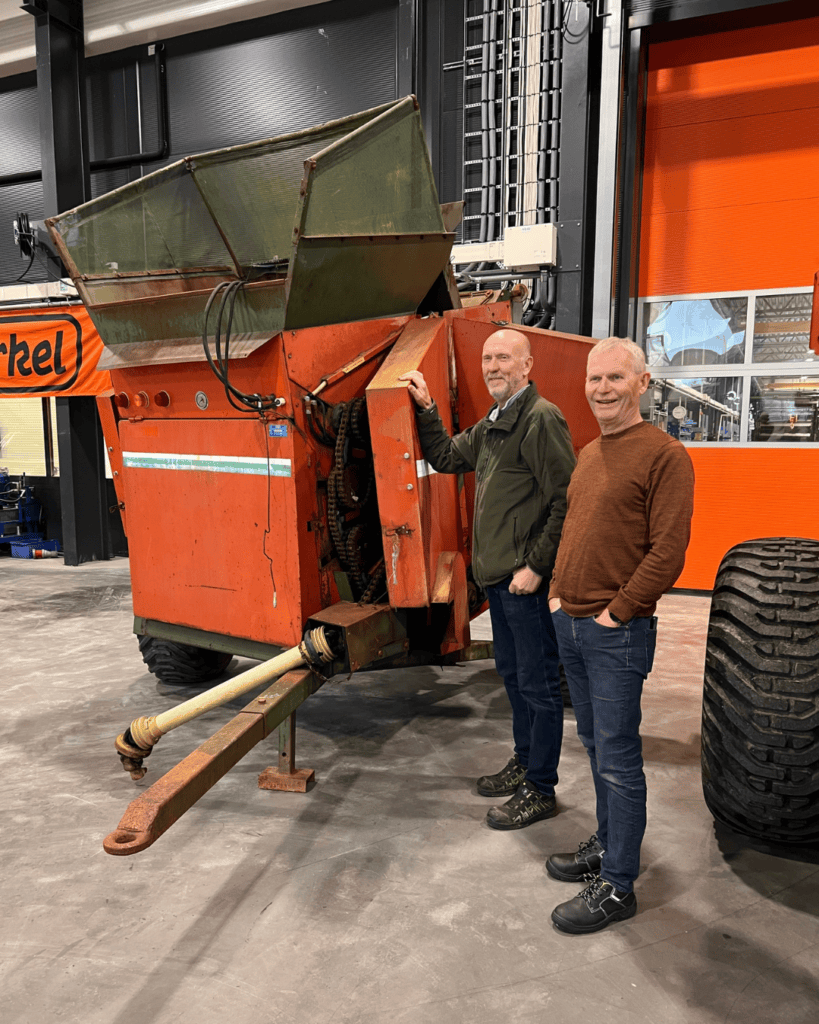
The first Orkel round baler stood alongside today’s technology – a fitting picture of just how much has changed over four decades.
But the story started with a surprisingly simple idea.
It started with a simple idea
In the mid-1980s, forage flail harvesters were common on Norwegian farms. At the same time, limited silo capacity was a challenge for many farmers.
Inventor Leif Haugum saw an opportunity: a bale chamber that could be fed directly from the top with chopped forage from his forage flail harvester. He brought the idea to Orkel, and the company quickly saw its potential.
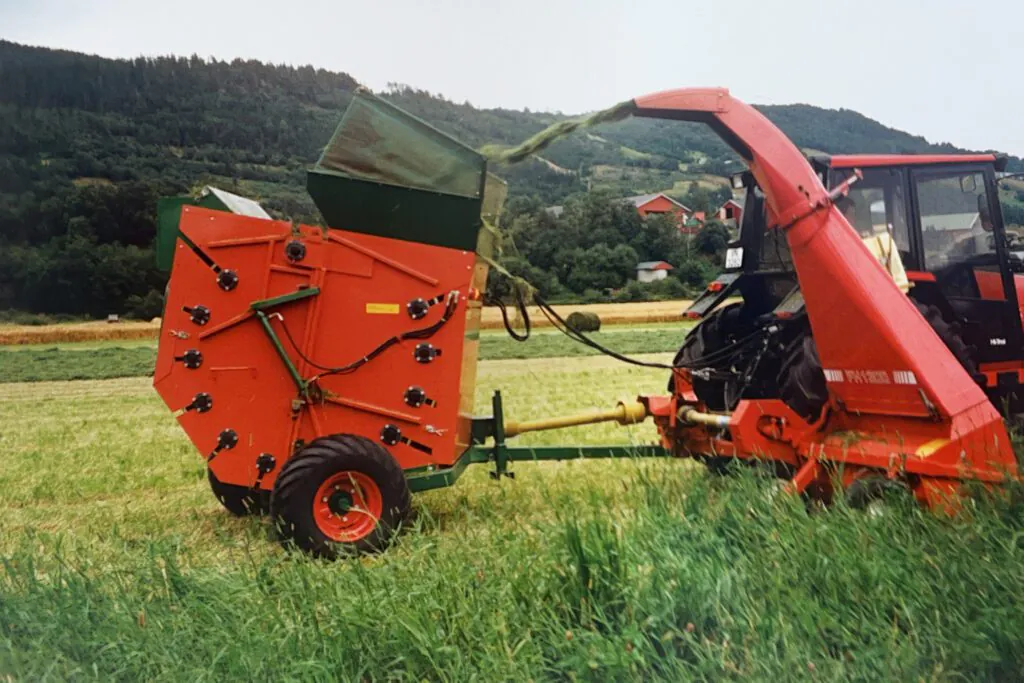
Jarl Gjønnes remembers why the idea made sense:
“The idea was simple and fitted well with the fact that almost every farmer had a forage flail harvester. It was a solution that could work for many.”
The ambition was equally straightforward: to develop an affordable baler that could suit a wide range of farmers while delivering good forage quality.
The result was the Orkel GP 1200.
A new way of making round bales
The top-fed chamber set the GP 1200 apart from conventional pick-up balers. Because the forage was chopped before entering the chamber, the material could be packed more densely. Less air in the bale created better conditions for forage preservation, while the higher density also offered advantages for handling and transport.
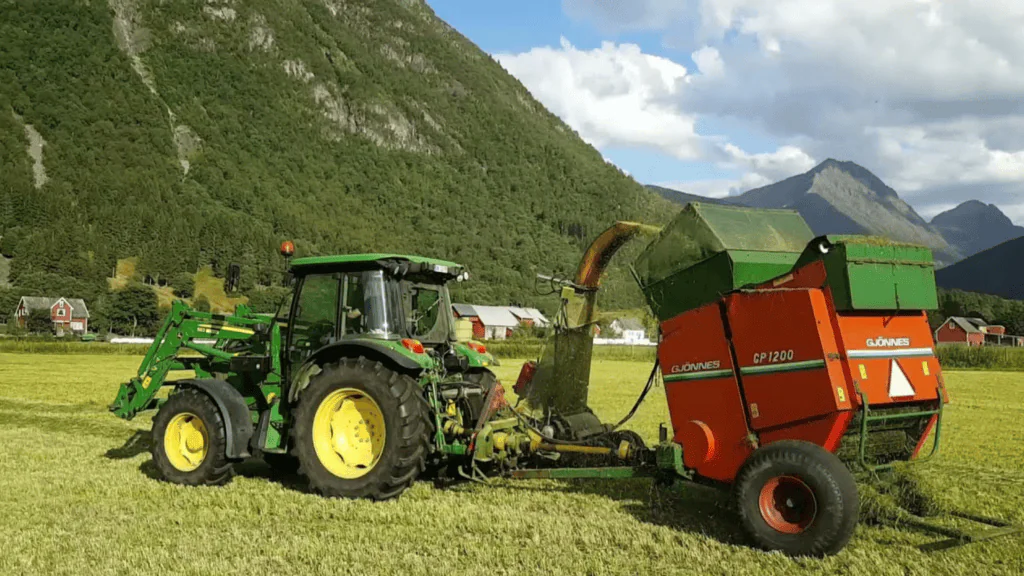
It did not take long before Orkel realised that the machine had significant potential. Jarl remembers the reaction from one early customer particularly well: “Produce 500!”
Turning that potential into production was not without challenges. According to Jarl, one of the biggest obstacles in the early years was access to modern equipment that could provide the efficiency and precision needed in manufacturing. But the development continued.
From GP 1200 to today’s Orkel Compactors
The GP 1200 was the beginning of a development journey that has continued for four decades.
Over the years, the technology evolved beyond traditional forage baling. Today, Orkel Compactors are used around the world for a wide variety of materials within agriculture, industry and waste management. This technology also helps transform waste into valuable resources.
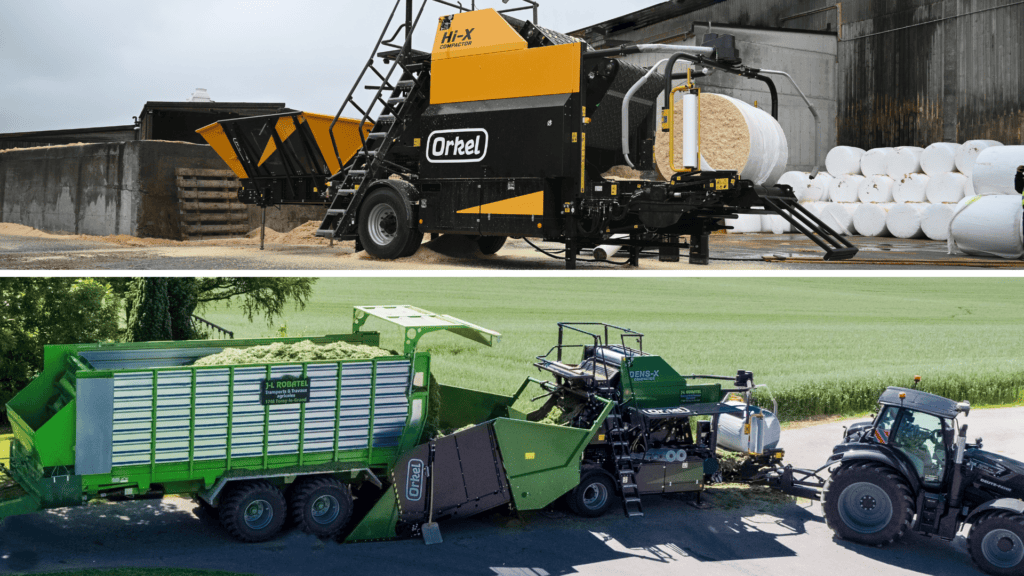
The machines themselves have changed enormously. Sensors, automation and data have become part of technology that started with a relatively simple mechanical idea.
For Jarl, however, there is a clear thread running through those 40 years: “A genuine interest in development and new ideas.”
Developed at Fannrem – used around the world
Seeing the first baler beside a modern Orkel Compactor makes the technological development easy to grasp.
For Jarl, it also represents something bigger. “I am proud that we represent a technology that contributes to better resource utilisation and a better environment – and that we have developed this here at Fannrem.”
Fannrem may be a small place on the world map, but the technology developed here has reached far beyond Norway.
What began as a solution to a practical challenge on Norwegian farms has grown into technology with applications far beyond its original purpose.
There is also a family connection running through the story.
Jarl’s father, Johan Gjønnes, founded Orkel in 1949. Asked what his father might have thought if he could see today’s Dens-X Pro and Hi-X Evo, Jarl believes he would have been struck by just how advanced and complex the technology has become – and by the fact that Orkel has developed the expertise to master it.
The result of a team effort
Although Leif Haugum and Jarl Gjønnes played important roles in the early development, 40 years of round bale technology is not the story of just one or two people.
Behind every generation of machines are people who have designed, welded, assembled, tested, sold, serviced and improved them – and customers who have challenged Orkel to keep developing.
It has always been a team effort. That was also an important part of the anniversary celebration. Current employees were joined by former colleagues and retirees, bringing together several generations of people who have contributed to Orkel’s development.
During the celebration, Leif and Jarl shared stories from the early years in a conversation led by today’s CEO, Erlend Gjønnes.
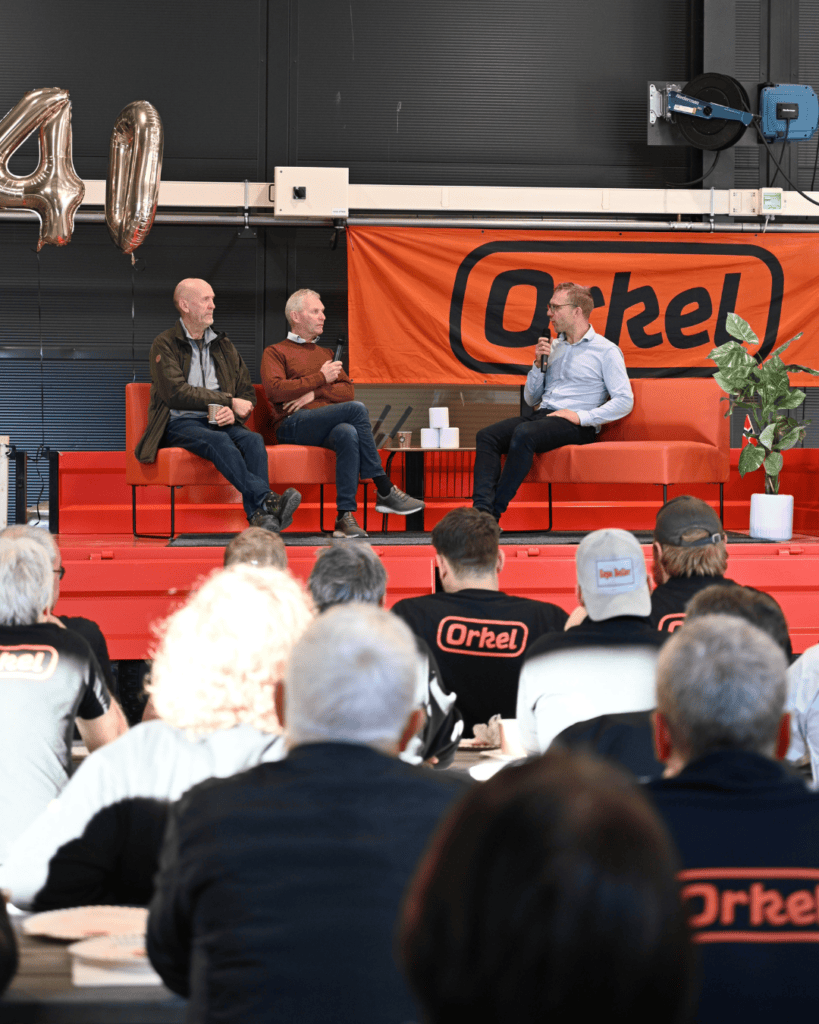
Leif and Jarl’s contribution was recognised in 2024 when they received the Norwegian Academy of Technological Sciences (NTVA) Honorary Award for their pioneering work.
40 years – and still developing
A lot has changed since 1986.
The machines are different. The markets are different. And the materials being baled extend far beyond what anyone could have imagined when the first GP 1200 was developed.
But the starting point was simple: there was a practical challenge, an idea for how to solve it, and a team willing to develop it.
One idea became a machine. The machine became a technology. And 40 years later, that technology continues to develop – from Fannrem to the world.
Want to know more about Orkel?
From our first round baler in 1986 to today’s advanced Compactors, we continue to develop solutions for agriculture, industry and waste management.
Interested in learning more about our technology or how it could benefit your business? We’d be happy to hear from you.
Contact Orkel
Enter your details below and we will get in touch with you!