



Whether you are handling Refuse Derived Fuel (RDF), Solid Recovered Fuel (SRF), Mixed Solid Waste (MSW), or recyclables like plastic and cardboard, the goal is the same: simplified, safe storage and cost-efficient transport. A bale of waste should be wrapped to prevent fire, leachate, odors, and flyaway debris during transport. You will be safe with our standard choices, but you can also continue reading to get some useful knowledge.
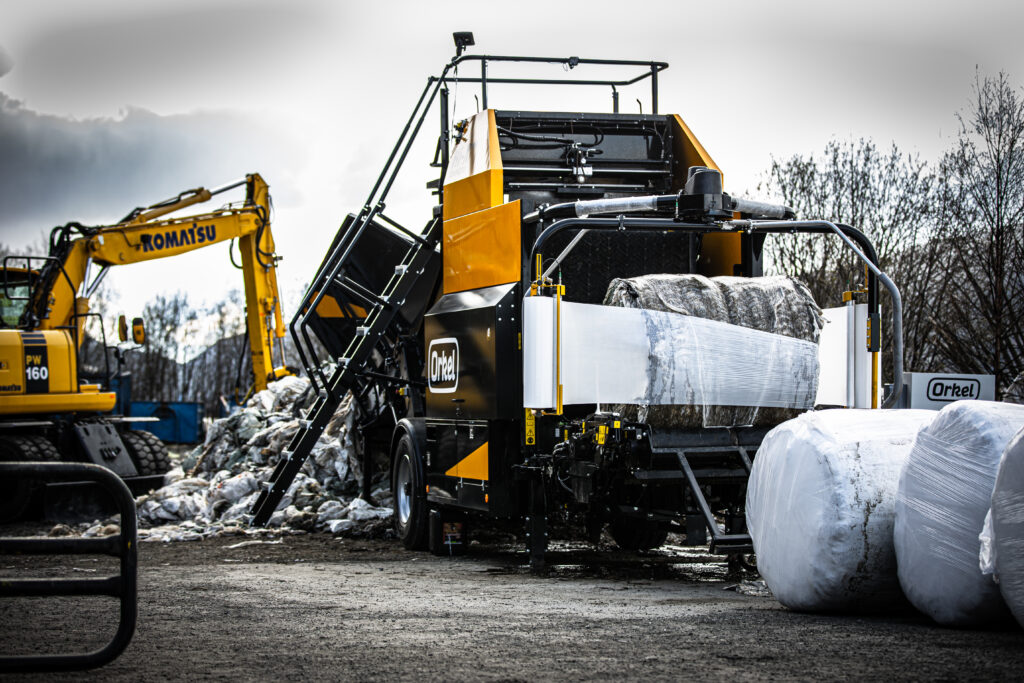
However, the efficiency of our industrial baler wrapper combinations relies on the quality of the wrapping film. Good choices gives a stable bale production. To help you maximize your operations, we have adapted our film guide specifically for the recycling and waste sectors.
1. Use Wide Film or net wrap?
Wide film (mantle film) is used to replace net wrap on the curved side of the bale.
- The “Single Waste” Solution: When baling RDF or SRF for waste-to-energy plants, the fuel must be consistent. Wide film and the outer wrap are both made of Polyethylene (PE). Unlike net wrap, which may require separation, wide film creates a bale wrapped in a single type of plastic. This simplifies the incineration process and leaves only one type of waste residue.
- Shape Retention for Expansive Materials: Waste materials like plastic or insulation wool are highly elastic and try to expand after compression. Wide film covers the curved side of the bale inside the chamber, holding the high-density shape better than net wrap and preventing air intake.
- Use a wide film that does not tear if some sharp material cuts a hole in the film during baling.
Net
- The net is even more resistant to tear. It can be a good choice to use net instead of wide film if the wide film tears when baling.
2. Selecting the Right Film Specifications
For non-organic waste, the film does not necessarily need to have a good oxygen barrier or UV-protection.
- Standard Width: The industry standard for Orkel compactors is 750 mm. This width ensures optimal coverage and speed.
- Thickness & Puncture Resistance: While 25µ (microns) is the standard, “high-performance” films (19–23µ) are increasingly common. These technical films offer excellent puncture resistance—crucial when baling materials with sharp edges like shredded plastic or wood shavings.
- Roll Length: A standard is 1500 m pr reel. High-performance films often come in longer reels (up to 18000 m). In a high-volume recycling facility, longer reels mean fewer stoppages to change film, keeping your line running efficiently.
See our selection of film
3. Layers: Sealing Odors and Leachate
Unlike silage, where the goal is fermentation, the goal in waste baling is often containment.
- The Minimum: We recommend a minimum of 6 layers to ensure a proper oxygen barrier and structural integrity. But if oxygen barrier is not of importance, 4 layers can be enough. Be aware that with 4 layers the bales are not as robust, so they might get more holes during handling and transport.
- When to Increase: If you are baling MSW (Mixed Solid Waste) intended for long-term storage or transport by sea, or if the material is particularly wet/odorous, increasing to 8 or more layers provides extra security against leakage and environmental contamination. Secure wrapping turns waste into a stable commodity that can be stored anywhere.
4. BaleID or Color Coding for Logistics
In a busy waste processing facility, logistics are key. Orkel BaleID tags or film color can be a powerful organizational tool.
- Content Identification: Use different colors of the tag or the film (White, Green, Black) to signify different waste streams (e.g., Green for SRF, White for recyclables).
- Clear/Transparent Film: Some operators prefer transparent film to visually inspect the contents of the bale immediately, ensuring quality control for the end receiver.
- Heat Management: If bales are stored outdoors in hot climates, lighter colors (white/light green) reflect sunlight and prevent the waste from overheating, which can minimize smell.
5. Proper Storage of Film Stock
- Store Upright: Store film rolls vertically. Horizontal storage can flatten the roll (“egg-shape”), leading to snaps and tears on the wrapper.
- Chemical Separation: Don’t let the film get in contact with hydraulic oils, fuel, or harsh chemicals. These substances can degrade the plastic structure before it is even used.
Summary Checklist for Waste Balers
- Use Wide Film: Creates a mono-material package ideal for Waste-to-Energy and recycling.
- Check Puncture Resistance: Ensure your film can handle abrasive materials like wood or plastic.
- Layer for Containment: Use 6+ layers to seal in odors and prevent leachate.
- Leverage BaleID tags or Coloured Film: to organize waste streams.
- Protect the Rolls: Store upright and away from industrial oils.
By using the right film strategies, your Orkel baler can turn difficult waste streams into neat, high-density, and easily transportable commodities.
Need advice on baling specific materials like insulation or plastic? Contact your Orkel representative today.